Carbon Works
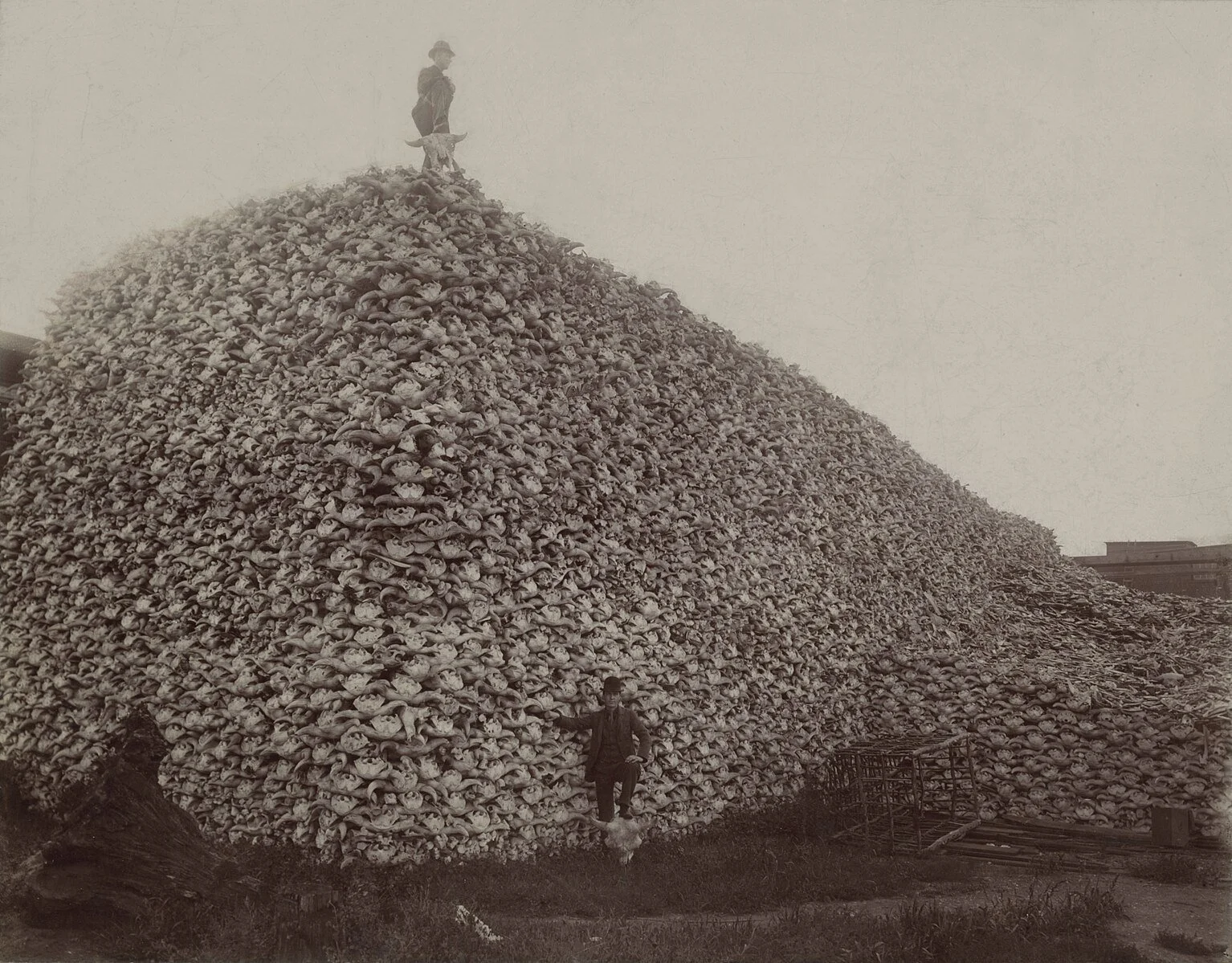
Burton Historical Collection, Detroit Public Library.
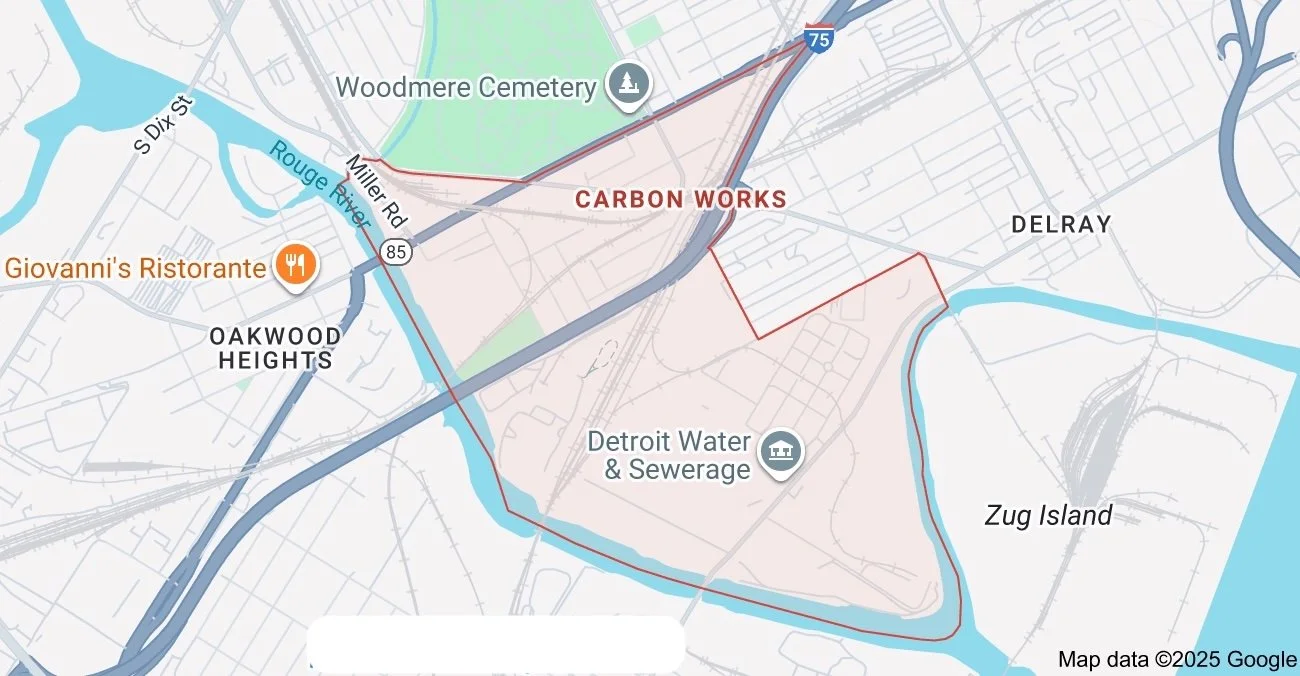
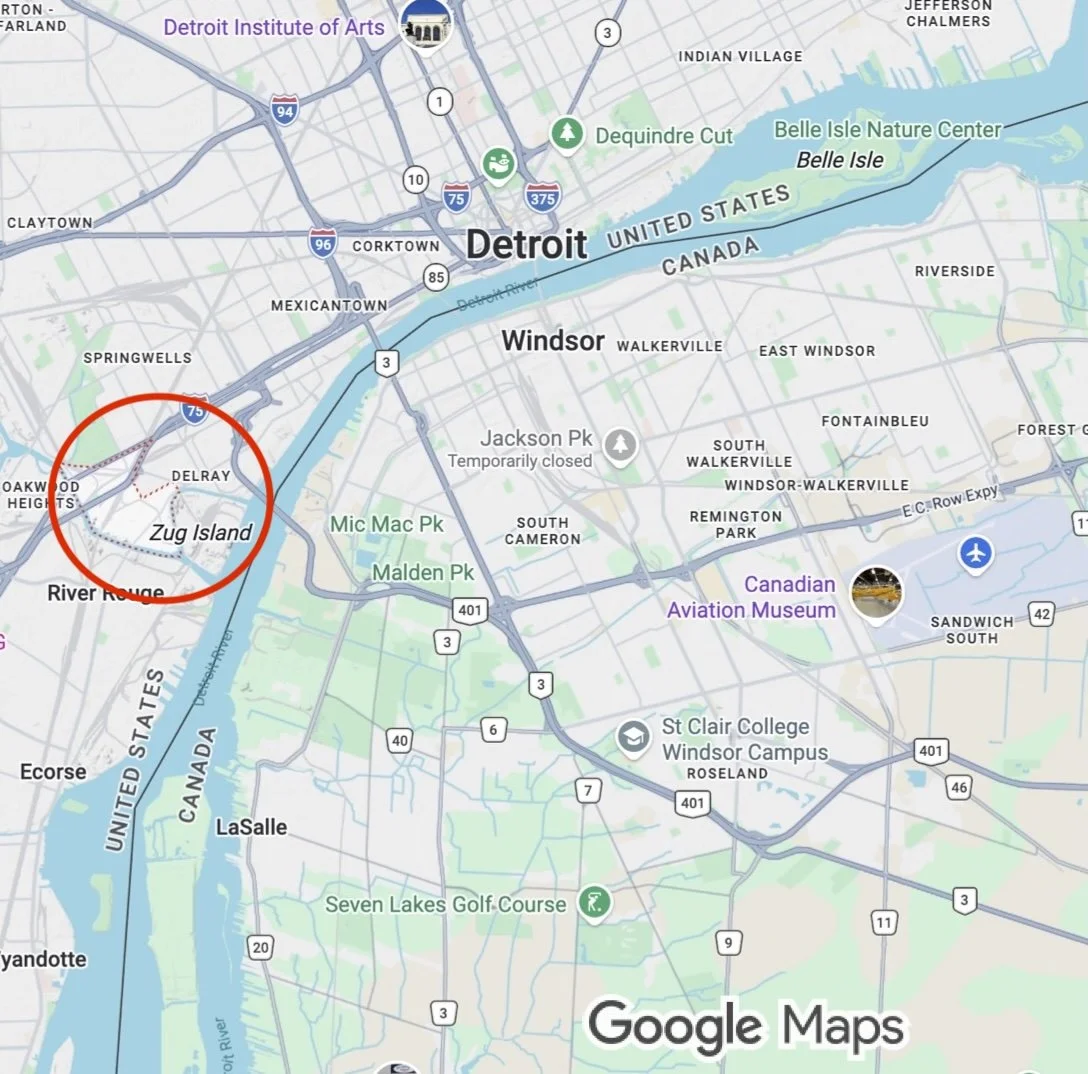
Carbon Works was the neighborhood just west of Delray in southwest Detroit, centered around the Michigan Carbon Works fertilizer plant (later called Agrico). Established in 1873, the plant produced animal charcoal to be used for glue, fertilizer and a purifying agent in the sugar industry. Most people in the neighborhood worked at the plant or had a connection to it.
Initially, the plant relied on an abundant supply of buffalo bones sourced from the Great Plains. The iconic photograph captured in 1892 (and shown at the top of this page) showcased a mountain of bison skulls at the plant almost five-persons high. However, as the buffalo population drastically declined from thirty to forty million at the end of the eighteenth century to fewer than 500 by the close of the nineteenth century, phosphate rock emerged as a substitute foundation for fertilizer production.
I didn’t grow up in the neighborhood, my grandparents did. I heard about Carbon Works, but it never quite made sense to me. It was a neighborhood—but not really. It was part of Delray—but not really. It sat across the tracks, yet only a stone’s throw away. One thing I did understand, though, was that you were from one side or the other. Whenever I asked a clarifying question, people would lightly chuckle and say, “No, honey…” I’d get an explanation, but never one that fully satisfied me when it came to Carbon Works.
I learned over time that it was a company neighborhood built around a fertilizer plant. But it wasn’t until I read Upton Sinclair’s The Jungle in high school that the realities of life in such a place became vivid to me: the harsh conditions, the constant dangers, the struggles of immigrant workers. I wanted to capture some of that in the book—the hardships, the too-common loss of life in industrial accidents, the drinking that helped people get by.
Friends of the Rouge. “The Lower Rouge River’s Bones.” Friends of the Rouge, https://therouge.org/the-lower-rouge-rivers-bones/.
