St. John Cantius Catholic church
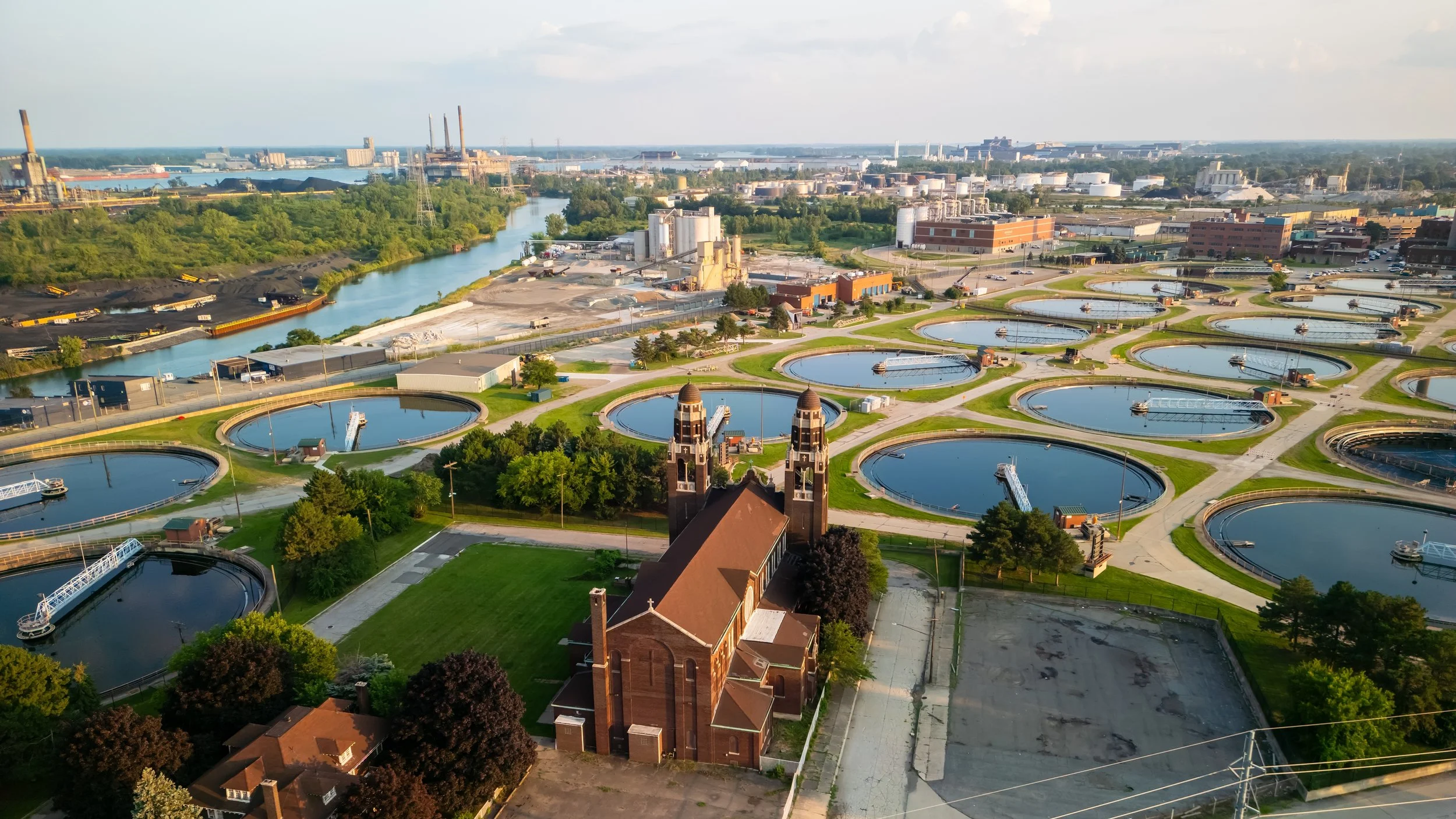
Do you have an aha moment from your youth—one of those sudden realizations that pulls a dozen loose threads together? One of mine happened at St. John Cantius Catholic Church in Delray.
Even though my grandparents had moved downriver and out of Delray in the 1940s, our family still gathered at St. John Cantius for holidays, major events, and holy days. The parking lot sat behind the church, out of view in the photo above, and because of that we always entered through a rear side door—never through the front. And the church, to my young nose, smelled awful. I knew better than to complain, so I assumed there was a plumbing problem no one wanted to talk about.
One day, when I must have been in my teens, we left through the front doors after a family gathering—and I finally understood. Directly ahead was a settling pond from the sewage treatment plant. You could practically spit and reach it. In fact, ponds surrounded the church on several sides. It looked like some industrial monster creeping forward, threatening to swallow our beautiful church whole. There was nothing wrong with the church at all. The smell came from the greedy sewage plant pressing in on it.
Growing up, spending time with elderly relatives, women in babushkas, polka bands at weddings, and exchanging gifts on Christmas Eve after a special dinner called Wigilia all felt completely normal. I was genuinely shocked in high school when I realized that not everyone had polka bands at their family weddings. And at the center of all of it—our traditions, our family identity—stood St. John Cantius.
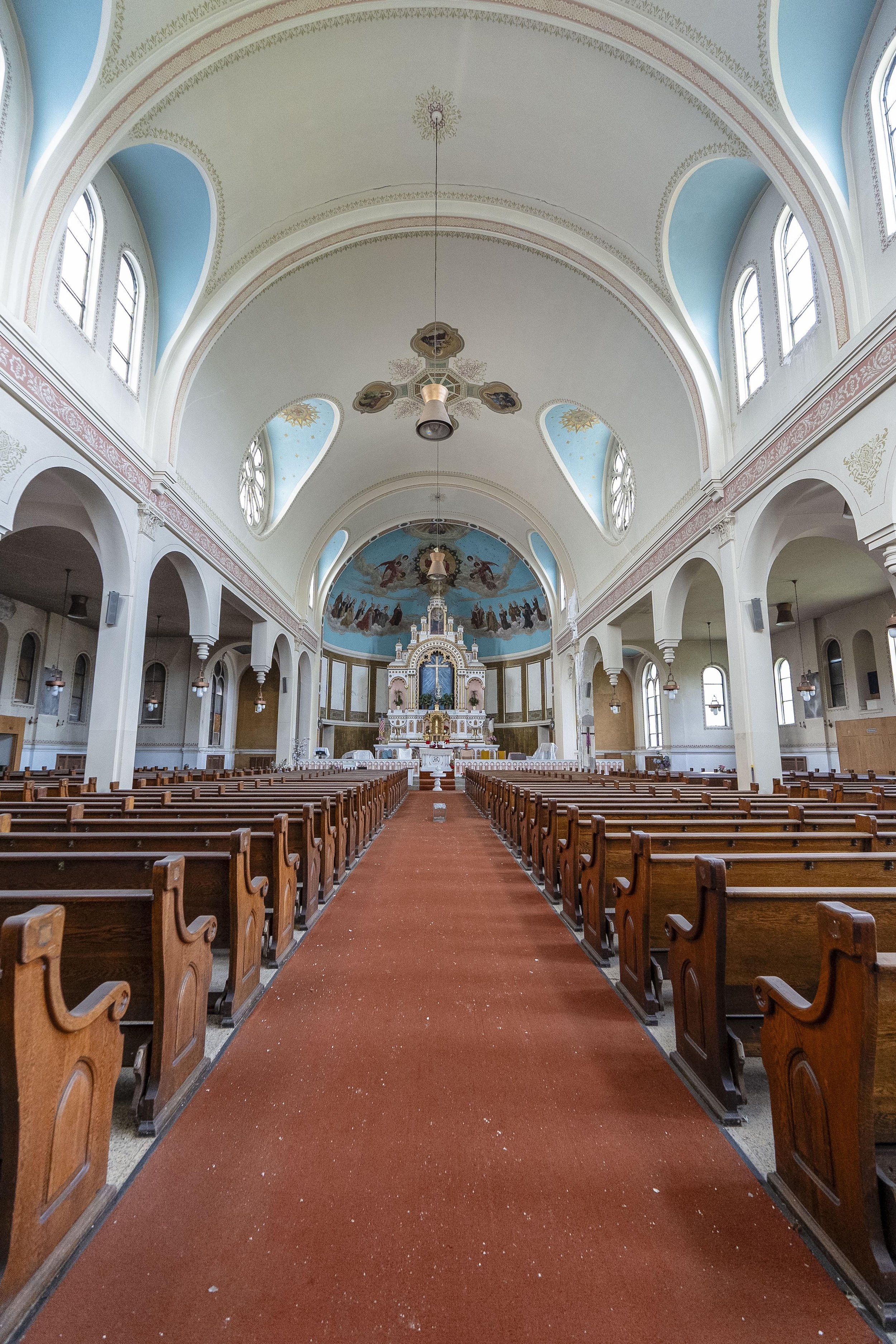
At St. John’s, I never paid attention to the homilies. I was far too much of a daydreamer. Instead, I studied the church itself. I imagined who had painted the glorious interior, who had carved the magnificent altar. I remember the robin’s-egg-blue dome above the sanctuary, the cherubic angels drifting across that sky, the gold portaits of saints encircling the altar and the Polish inscriptions glinting above.
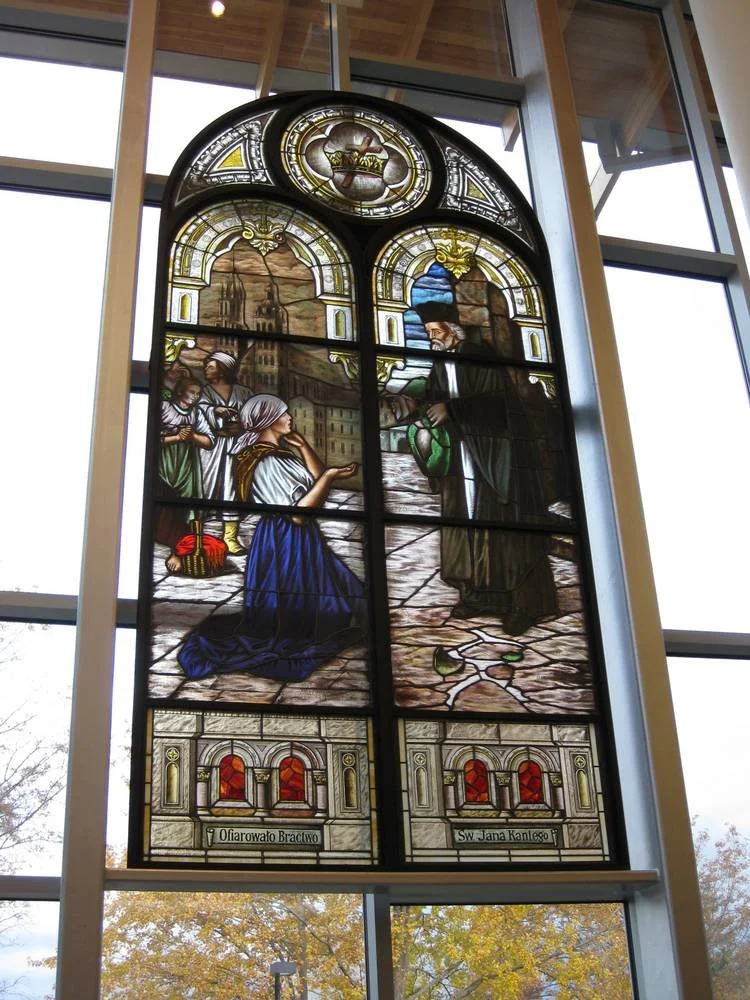
The best and most unique part were the stained glass windows. They were so unlike other windows at other churches. so tall and impossibly intact despite the neighborhood’s decline and the encroaching industry. The delicate images of saints and apostles, painted in both gentle and vivid hues, captured light in a way that made them seem alive. And, at the bottom of each, the most gloriously difficult to pronounce Polish names. It filled me with pride that this wasn’t stuffy old Latin—this was Polish, beautiful, and made possible by the sacrifices of those who came before me.
As I describe in the book, before St. John’s founding in 1902, the nearest Polish Catholic church was more than three miles from Delray. Exhausted from the long walk each Sunday and on holy days, three dozen families—Frank and Frankie’s among them—worked extra shifts, sold treasured heirlooms, and even skipped meals to raise the funds needed to establish St. John Cantius parish and school. They began in a modest wooden building in 1902, expanded to a larger church, and finally, in 1925, saw their devotion rewarded with the construction of the magnificent Romanesque brick-and-stone church that I grew up knowing.
The final Mass at St. John Cantius was held on Sunday, October 28, 2007, and sacred items—including the stained-glass windows—were relocated to other churches and institutions. Driving north on I‑75, you can still see the church standing alone on the east side of the highway as you approach downtown Detroit. Beyond the front entrance steps, the Rouge River, a tributary of the Detroit River, and the encroaching sewage treatment plant remain visible.
Austin, D. (2023, May 21). St. John Cantius Catholic Church. HistoricDetroit.org. https://historicdetroit.org/buildings/st-john-cantius-catholic-church
Detroit Polonia. (2020, October 5). Remembering St. John Cantius Delray: Part 1 of 2. https://www.detroitpolonia.org/remembering-st-john-cantius-delray-part-1-of-2/
A note on the two priests featured in The Widow from Delray: Fathers Walczak and Pzechowski were real people. Father Walczak served as the first pastor when the parish opened in 1902, so it felt fitting to include him in the story as himself. Father Pzechowski was a priest at Orchard Lake St. Mary’s and a family friend—the kindest priest I ever knew. He captivated me with stories of skiing with Pope John Paul II in his youth in Poland and surviving the Katyn massacre as a Polish officer during World War II. I always saw him as someone who had emerged from great tragedy, and I drew upon that experience in crafting his presence in the book.
This YouTube video provides a nice history of Katyn.
https://www.youtube.com/watch?v=f2djnWw751s
